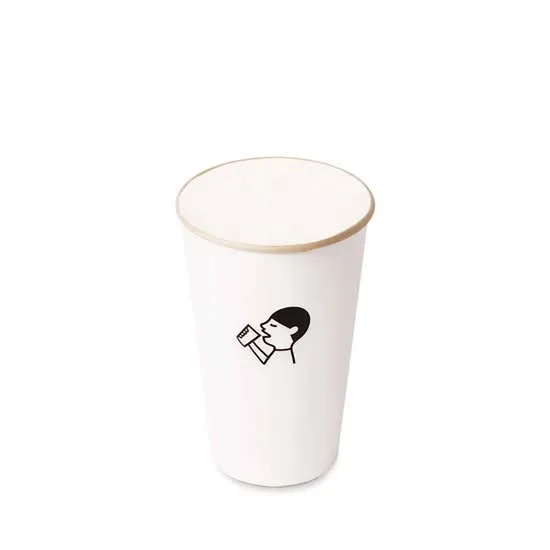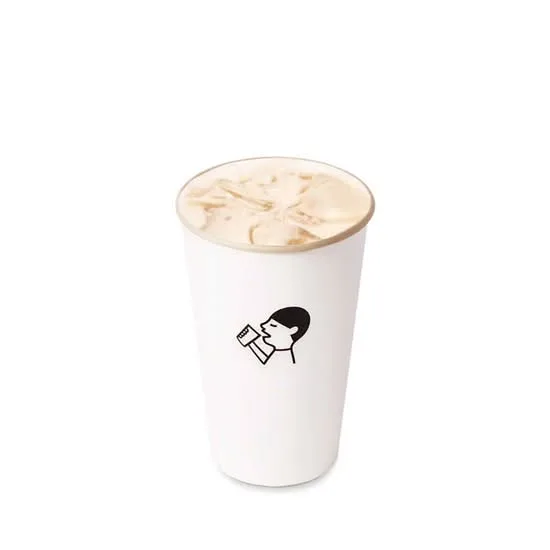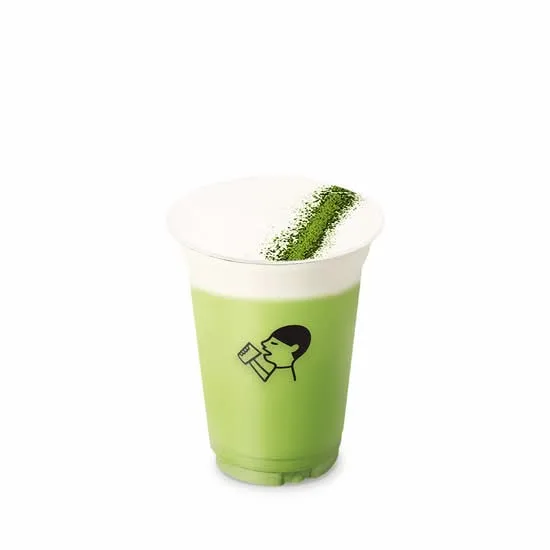
HEYTEA and Chagee are the two Chinese tea chains expanding fastest in the United States, and they get compared constantly by people who have only been to one. They are less alike than the pairing suggests.
Both arrived in the United States with a reputation already built at home, and both are being judged here against American bubble tea rather than against what they replaced in their own market. That mismatch produces most of the confused reviews.
HEYTEA is a wide menu built around toppings, fruit and a signature cream cap. Chagee is a narrow menu built around a small number of teas served with milk and almost nothing else. Both are good and they answer different questions.
Drinks Covered Here
| Drink | Price | Calories | Sugar |
|---|---|---|---|
| Jasmine Milk Tea | $8.49 | 220 | 23 g |
| Longjing Milk Tea | $8.49 | 220 | 21 g |
| Black Milk Tea | $8.49 | 275 | 28 g |
| Cloud Matcha Latte | $10.49 | 315 | 25 g |
Prices vary by location. Updated 28 September 2026.
What each chain is actually built around
HEYTEA sells 39 items in the United States across six drink sections plus toppings. The range covers fruit tea, milk tea, brown sugar bobo, matcha, a leaf-focused Tea Lab line and a rotating seasonal board.
The signature is the cheese cloud, a salted whipped cream cap the brand is widely credited with putting on a tea menu in 2012. Almost everything else on the board is an application of that idea or a fruit drink built alongside it.
Chagee runs a much shorter menu built on a handful of named teas, usually served with milk and little else. There are no cream caps, the topping list is minimal, and the drinks are closer to a Hong Kong style milk tea than to bubble tea.
That difference explains most of the arguments about the two. Someone who wants texture, fruit and choice will prefer HEYTEA. Someone who wants a clean milk tea with the leaf audible will prefer Chagee.
Menu size and choice
HEYTEA’s advantage here is straightforward. Eight fruit teas, eight milk teas, eight Tea Lab drinks, three matcha builds and eight toppings gives a group of four people a realistic chance of everyone finding something.
The Tea Lab range in particular has no direct Chagee equivalent, because it sells the same tea in three formats and lets you compare them. Gardenia 1 at $7.90 is the leaf on its own and the two builds above it add milk or coconut water.
Chagee’s advantage is the opposite one. A short menu is easier to order from, harder to get wrong, and signals that the shop is doing a small number of things carefully.
For anyone who dislikes tapioca, Chagee is the easier fit by default. At HEYTEA the answer is simply to skip the toppings, since none of the standard drinks include them.
Price
HEYTEA’s American board runs from $5.49 for a plain Jasmine Tea up to $11.90 for the capped Tea Lab drinks, with most of the fruit and milk range sitting in between.
The Tea Lab prices are the ones that draw complaints, and the reason for them is the leaf rather than the build. A drink with no syrup, no topping and no cap is mostly tea by cost, which is a hard thing to see on a receipt.
Chagee prices sit in a narrower band, because the menu is narrower. There is no cheap plain tea at the bottom and no capped premium build at the top.
Toppings widen the gap further. Two additions on a HEYTEA drink can add several dollars, and that is where a HEYTEA order most often ends up more expensive than the Chagee equivalent.
A like-for-like comparison is harder than it looks for that reason. A plain HEYTEA milk tea against a plain Chagee milk tea is close on price. A loaded HEYTEA order against the same Chagee drink is not, and most people making the comparison are comparing the loaded version without noticing.
Consistency and how each chain scales
A short menu is easier to run consistently than a long one, and that is the structural advantage Chagee has. Fewer drinks means fewer techniques, less training and less that can go wrong on a busy afternoon.
HEYTEA has taken the harder path deliberately. Real whipped cream, properly whisked matcha and tapioca cooked in batches through the day are all things a rushed shift does visibly worse, and none of them can be prepped once in the morning.
That shows in the spread of ratings across the HEYTEA network, which run from 2.9 to 4.9 on an identical menu at identical prices. The Boston Allston store holds 4.9 across more than 900 reviews.
The practical consequence is that a HEYTEA recommendation has to name a store rather than the brand. A well run HEYTEA beats most things in the category and a badly run one is beaten by a mediocre Chagee.
Caffeine, dairy and dietary fit
HEYTEA’s matcha builds carry the most caffeine on either board, since matcha is the whole leaf ground and consumed rather than steeped and thrown away.
At the other end, the Supreme Brown Sugar Bobo Milk (Original) is caffeine-free by construction because it contains no tea at all, and several drinks offer a tea-free option that removes the caffeine on request.
For dairy avoidance, HEYTEA’s answer is the Oat Mango Boom on the seasonal board, which was built for oat rather than substituted into it, plus the coconut-based fruit drinks that are dairy-free as they come.
A milk substitution in a drink designed around dairy gets a compromised version at either chain. The better route is to order something built without it in the first place.
Sugar and customisation
HEYTEA offers nine sugar options on most drinks, including four made with a zero-calorie sweetener rather than syrup. That is more than almost any chain in the American market.
The default is Less Sugar rather than full sugar, which catches people out. A HEYTEA drink ordered with no instruction arrives at a reduced setting, and Super Sweet is the level above it.
Ice runs across five settings plus Hot and Warm, and several drinks offer a Tea Base Adjustment that takes the tea Light or Strong. A few offer a tea-free version that removes the caffeine entirely.
Chagee also offers sweetness and ice levels, in line with the category. The difference is depth rather than presence, and the zero-calorie sweetener twins are the part HEYTEA has that most competitors do not.
Store count and where each one is
HEYTEA runs 51 United States stores across 10 states as of this writing. California holds 19 and New York 16, which means those two states account for roughly two thirds of the network.
The footprint is concentrated rather than national. There is one store in the entire Midwest, in Chicago, and nothing at all in the South outside Houston.
Chagee has expanded aggressively in similar markets, so in the cities where both operate you will usually find them within a few blocks of each other. In the cities where neither has arrived, neither is close.
Our store locator lists every HEYTEA address with ratings, phone numbers and hours, which is the practical answer for anyone deciding based on what is actually near them.
Which one to choose
Choose HEYTEA for fruit, for texture, for the cheese cloud, and for the ability to give four people four genuinely different drinks from one counter.
Choose Chagee for a straightforward milk tea where the leaf is the point and the menu takes ten seconds to read.
For a first HEYTEA visit that tests the brand at its best, Gongfu 3.6 at $11.90 is the drink that explains the pricing, and Cloud Jasmine Tea (Original) at $7.49 is the drink that explains the reputation.
The comparison that actually matters is store quality rather than brand. A HEYTEA rated 4.8 and a HEYTEA rated 3.5 serve the same menu at the same prices, and the difference between them is larger than the difference between the two chains.
What neither chain publishes
Neither HEYTEA nor Chagee publishes United States nutrition data in any accessible form. There is no calorie table, no sugar breakdown and no allergen sheet on either brand’s American web presence.
That is worth stating plainly because a lot of sites present precise nutrition figures for both chains as though they came from the company. They did not, and neither do ours.
Every calorie and sugar figure on this site is an estimate, calculated from the published ingredients and standard values, and labelled as an estimate on every page it appears on. None of it is emitted as structured data to search engines, because presenting an estimate as an official figure is the specific thing that would make it harmful.
For anyone with an allergy or a medical reason to know exactly what is in a drink, the only reliable route at either chain is to ask at the counter.